Moonless nights ahead for 2012 Geminid meteor shower
DECEMBER 12, 2012
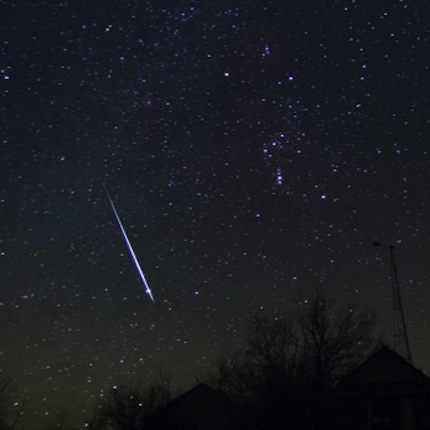
In 2012 we’re guaranteed of dark, moonless nights for the annual Geminid meteor shower. In the Northern Hemisphere, this meteor shower often rates as one of the best – if not the best – shower of the year. You can often see up to 50 meteors per hour or more on a dark night. The Geminids are also visible from the tropical and subtropical parts of the Southern Hemisphere, but at temperate latitudes in the Southern Hemisphere, the meteor numbers tend to be few and far in between.
The timing couldn’t be better this year, as the new moon falls on Thursday, December 13, the expected peak night for the Geminid meteor shower. But this Wednesday night, December 12, and Friday night, December 14, should also present a fine display of Geminid meteors. If it’s clear and you have access to an open, dark sky, these next three nights should be favorable for meteor watching.

Here’s this morning’s waning moon – December 12, 2012 – as seen by EarthSky Facebook friend Priya Kumar in Oman. Thank you, Priya! If you look for the moon on Thursday morning, you won’t find it. The moon is now crossing the sky with the sun during the day, leaving the night sky dark for meteor-watching.
By the way, this December 2012 new moon will be the closest new moon of the year – what some people call a supermoon. At this juncture, the gravitational tug of the sun and moon team up together to create wide-ranging spring tides. If you live along the ocean coastline, watch these spring tides usher in extremely-low low tides and exceptionally-high high tides in the same day.
As a general rule, the dazzling Geminid meteor shower starts around mid-evening and tends to pick up steam as evening deepens into late night. No matter where you live worldwide, the greatest number of meteors usually fall in the wee hours after midnight, or for a few hours centered around 2 a.m. local time. If you’re game, you can watch the Geminid shower all the way from mid-evening until dawn.
Radiant point for December’s Geminid meteor shower

The radiant point for the Geminid meteors is found in front of the constellation Gemini
The Geminids are a consistent and prolific shower – one of the best of the year. Although The shower typically produces 50 or more meteors per hour – or an average of about one every minute – keep in mind that meteor showers often come in spurts and are interspersed with lulls. Remember, it can take as long as twenty minutes for your eyes to fully dark-adapt, so give yourself at least an hour of observing time. Simply srawl out on a reclining lawn chair and enjoy the show.
Although Thursday night until Friday morning will probably be the best for watching the Geminid meteors, tonight should provide plenty of meteor activity as well.
Oh - one more thing
The Earth-crossing asteroid 4179 Toutatis is making one of its close flybys,
gliding among the stars and awaiting your telescope.
Its magnitude will be 10.9 to 10.5 from December 11th through 14th.
it's more than likely going to be cloudy here
and stinkin cold too
Hope your sky is clear and bright
ilym








Recent Comments